


Bonza Planet
4.31.62K Reviews
App Specs
- Version
- 5.0.1
- Updated On
- License
- Free
- Downloads
- 100,000+
- Developer
- Minimega
- Categories
- Word
- Platform
- Android
Screenshots


 Analysis by AppCompare
Bonza Planet is the kind of word game that makes a strong first impression without demanding a long explanation. I opened it expecting a familiar vocabulary challenge, but its appeal comes from the way it turns word assembly into a compact, visual puzzle. It is made by Minimega, the developer behind Bonza Word Puzzle, and the connection is clear: this is a game for people who enjoy finding order in scattered letters rather than simply answering clues as quickly as possible.
After spending time with it, my main question was not whether it was enjoyable. It was whether it deserved a permanent place on my phone once the initial curiosity wore off. That is a more demanding test for a casual game. A clever first session is easy to deliver; a game that remains useful during ordinary breaks needs variety, a comfortable rhythm, and enough mental freshness to avoid feeling like routine homework.
Bonza Planet is free to start and carries an Everyone age rating, so it is easy to recommend for family-friendly play and short solo sessions. Its average rating is 4.3 from around 10 thousand ratings, with roughly 1.6 thousand written reviews, while the game has passed 100 thousand installs. Those figures suggest a healthy audience, but they do not answer the practical question I care about most: will you still want to open it after the novelty fades?
Why the first week feels so inviting
The opening appeal is the low friction. I do not need to learn a complicated control scheme, build a character, or remember a large collection of rules. The focus stays on words and the satisfaction of making a confusing arrangement become readable. That makes it particularly comfortable on a phone, where a game often has to earn attention in a few seconds rather than through a long setup.
I found the best early sessions came when I treated each puzzle as a small reset between other tasks. A short break, a wait in a queue, or a quiet few minutes before bed is enough. The game does not need the commitment that a larger word title can ask for, and it feels more purposeful than endlessly scrolling through social feeds.
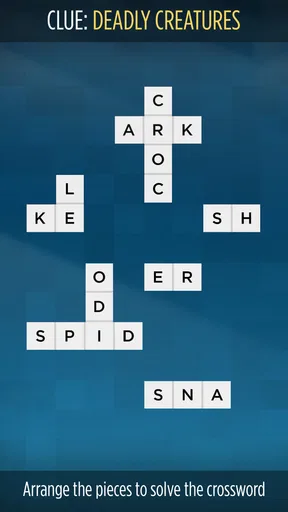
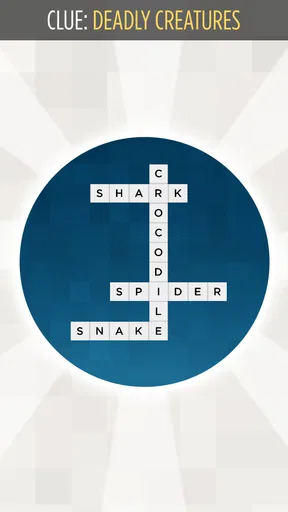
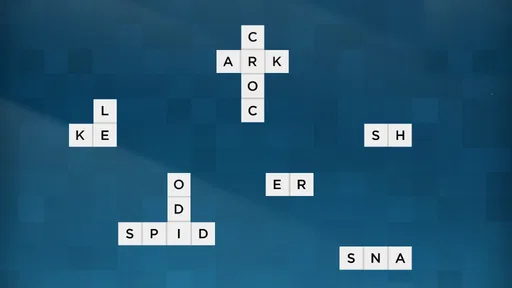
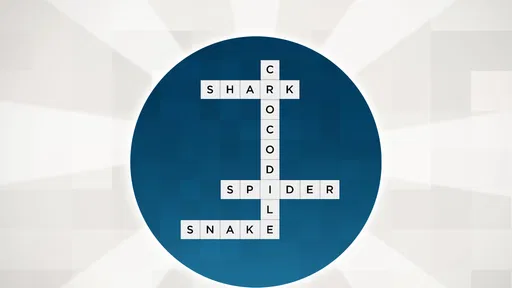
The visual structure also gives it a different personality from a standard crossword. In a crossword, the grid and crossing letters usually guide you toward a fixed answer. Here, the pleasure is more about recognizing relationships between pieces and testing how they fit together. That difference matters if you like wordplay but find traditional clue solving too rigid.
The most useful early habit is to solve by structure before vocabulary. Instead of immediately hunting for the longest or most impressive word, I first look for obvious fragments, repeated patterns, and pieces that seem likely to belong together. This reduces random tapping and makes difficult moments feel like deduction rather than guessing.
Worth Reading Before You Choose

EA SPORTS FC Mobile 26 Is a Bigger Football Game, but It Takes Time

Flipboard Shows What News Apps Must Do Beyond the Feed

Switching to Android Auto Means Rethinking Your Driving Routine

Google Calendar Makes a Crowded Week Easier to Manage

Ludo King Makes the Most of the Minutes Between Plans

Baby Panda World Brings Quick Play to Modern Phones, but Its Game Library Feels Busy
A good fit for casual vocabulary practice
I would recommend it to players who want a gentle mental workout without the pressure of a timer or a competitive ladder. It can encourage attention to spelling, word shape, and associations, but I would not present it as a formal language-learning tool. Someone studying a new language may enjoy recognizing familiar words, yet the game is better understood as entertainment that happens to exercise vocabulary.
It is also a pleasant choice for households where people have different gaming tastes. A child, parent, or older relative can understand the basic idea quickly, and the Everyone rating supports that broad audience. Still, younger players who are not yet comfortable reading may need help, because the central challenge depends on recognizing written words rather than simply matching pictures.
One small but important tip is to avoid playing every puzzle in one concentrated burst during the first week. The game is most enjoyable when I leave some space between sessions. A difficult arrangement can become easier after a break, and pacing myself helped preserve the feeling of discovery. Finishing everything available as quickly as possible may create a short-lived high followed by a much flatter experience.
What separates it from familiar word games
Compared with a daily guessing game, Bonza Planet feels less dependent on one dramatic answer. A daily guess-and-check format gives a clear ritual, but it can also become repetitive because the same basic loop returns on a fixed schedule. This game offers a more exploratory kind of satisfaction: I am organizing information, not merely narrowing down a hidden word.
Compared with a crossword, it is lighter and less formal. Crosswords reward broad knowledge, clue interpretation, and persistence across a large grid. Bonza Planet is easier to pick up when I want a contained challenge, although players who love elaborate clues and a deep sense of progression may find it less substantial.
Compared with an anagram game, it appears less focused on speed and word volume. Anagram titles often reward producing as many answers as possible under pressure. Here, I get more value from thinking about how pieces relate to one another. That makes it calmer, but it also means it may not satisfy someone looking for a fast score chase.
Does the appeal survive from month to month?
My answer is qualified: it can, provided I use it as a flexible break rather than a primary game. The underlying puzzle idea is pleasant enough to revisit, especially when I want something quieter than an action game. Its recurring value comes from the fact that word assembly remains satisfying even when I already understand the rules.
However, familiarity changes the experience. During the first week, I am learning both the game’s logic and its visual language. Later, I am no longer receiving that discovery for free. The puzzles have to carry the experience on their own, and my enjoyment depends more heavily on whether I am in the mood for careful word sorting.
This is where personal routine matters. I would keep it installed if I regularly enjoy short, screen-based breaks and want an option that does not require sound, a stable group of players, or a long uninterrupted session. I would be less likely to return if I need constant novelty, competitive rankings, or a strong story to pull me forward.
A practical monthly routine is to use it as a “waiting room” game rather than a daily obligation. I might open it while waiting for an appointment, during a commute when it is safe to do so, or after finishing a demanding task. That preserves its role as a small reward. Turning it into another item on a strict checklist can make a relaxing puzzle feel like maintenance.
Where the recurring value comes from
The game’s lasting strength is its ability to occupy a narrow slice of time without feeling completely empty. I can play for a few minutes, stop, and return later without needing to reconstruct a complicated strategy. That makes it more dependable than games whose enjoyment depends on a long session or a full team.
It also rewards a different mental mode from ordinary word searches. When I am tired, I do not always want to generate words from scratch. I may prefer to inspect what is already in front of me and make connections gradually. Bonza Planet works well in that mood, particularly when I want concentration without intensity.
There is a useful trade-off here. The game’s accessibility is part of its charm, but accessibility can limit depth. Once I have learned the basic way to approach a puzzle, I may want stronger variation, more demanding goals, or a clearer long-term reason to continue. Players who need a visible mastery path should compare it with a more progression-heavy word game before committing their time.
How the free model affects my routine
The game is free, which removes the biggest barrier to trying it. That makes it easy to test honestly: install it, play enough to understand the rhythm, and decide whether the puzzle style suits you. In-app purchases range from $0.99 to $46.99 per item, so I would pay attention before confirming any optional purchase, especially if the game becomes part of a family device’s casual rotation.
I do not think the presence of optional spending automatically weakens the experience, but it changes how I evaluate the game. A free word puzzle should remain comfortable for someone who simply wants to sample it, while a regular player should decide in advance whether paying for convenience is worthwhile. My advice is to enjoy the basic loop first and treat purchases as a separate decision, not as part of the installation process.
For parents, the Everyone rating is reassuring from a content perspective, but I would still keep normal purchase awareness in mind. Age suitability and spending control are different questions. A child may be perfectly able to play the puzzles while still needing an adult to manage optional transactions.
The maintenance burden is pleasantly small, with limits
One reason I can imagine keeping Bonza Planet installed is that it does not ask me to maintain a complicated account, collection, or social routine in my head. There is no need to coordinate with friends before playing, and I do not have to remember a large set of upgrades. I can pick it up after a gap and understand what I am doing quickly.
That low maintenance is valuable for a game intended for spare moments. Some mobile titles quietly become chores because they expect daily check-ins, resource collection, or constant optimization. This one is easier to keep in the background. If I ignore it for a week, I do not feel that I have fallen behind in a competitive ecosystem.
The trade-off is that a lightweight game may not create a strong reason to return. Maintenance systems can be annoying, but they also provide structure. Without that pressure, the game depends on my own desire to solve another puzzle. For me, that is healthier than a forced streak, though it means the app can disappear from my attention when another game offers a more urgent goal.
My best maintenance strategy is to keep it available but not make it my only word game. Alternating it with a crossword, a spelling challenge, or a book keeps its particular style from becoming predictable. This is not a criticism of the core design; it is a realistic way to protect a small puzzle from overuse.
Device and version considerations
The current version is 5.0.1, and the game supports devices running Android 5.0 or later. That broad compatibility is useful if I am reviewing it for an older phone or a household with mixed devices. I would still make sure the device has enough free space and that the operating system is supported before installing, particularly on hardware that has not been updated in a long time.
Because this is a mobile word game rather than a graphics-heavy action title, its appeal is not tied to having the newest phone. The important question is whether the screen is comfortable for reading and moving pieces. On a small or damaged display, the very visual arrangement that makes the game distinctive may become tiring.
I also prefer using it when I can give the puzzle my full attention. Although the sessions are suitable for interruptions, solving while distracted can turn a thoughtful challenge into a series of careless moves. The game is easy to start, but it still benefits from a quiet moment once I am actually trying to finish a difficult arrangement.
What may cause fatigue after the novelty fades
The first source of fatigue is repetition of method. Even when the individual word content changes, I am still applying a related process: inspect, group, test, and refine. Players who enjoy that loop can find it meditative. Players who need a constant change of rules may feel that the game has shown them most of its personality early.
The second is the absence of a stronger reason to care about each solved puzzle. A good word arrangement can feel rewarding on its own, but not every player will find that enough month after month. If I want a campaign, characters, elaborate achievements, or a competitive community, this is probably not where I would spend most of my time.
The third is mood. Bonza Planet asks for patience and visual attention. It is not the best choice when I want to react quickly, compete against another person, or fill a loud social session. A game can be well designed and still be wrong for a particular break. I would skip this one when I am looking for speed, dramatic stakes, or a large strategic system.
There can also be a subtle vocabulary barrier. A player with a smaller English vocabulary may understand the mechanics but still struggle with the content. That can be a useful challenge, yet it may feel discouraging if the player expects every puzzle to be immediately accessible. I would recommend trying it with a friend or family member if word confidence is a concern, because discussing possible groupings can make the learning curve friendlier.
Who should choose something else
I would point crossword enthusiasts toward a traditional crossword app if clues, crossing answers, and a larger grid are the main attraction. I would suggest a competitive anagram game to someone who wants timed rounds and high scores. I would also choose a richer puzzle adventure for a player who needs narrative context or a sense of unlocking a world.
Bonza Planet is better for the person who likes a clean, self-contained word problem. It is especially suitable for someone who wants to play alone, stop at any time, and return without penalties. That sounds modest, but it is exactly why I found it useful: it does not try to turn every spare minute into a commitment.
Another realistic use case is shared solving. I can imagine two people looking at the same screen and suggesting ways to organize the pieces, with one person handling the actual moves. That changes the game from a solitary pastime into a small conversation starter. It will not replace a full party game, but it gives families and friends a low-pressure way to collaborate around language.
My long-term verdict on keeping it installed
Bonza Planet earns lasting space on my phone if I judge it as a compact word-puzzle companion, not as an endlessly expanding main game. Its first-week appeal is immediate, its maintenance burden is low, and its free entry makes experimentation easy. The visual approach gives it a recognizable identity instead of making it feel like another standard word scramble.
Its long-term weakness is equally clear: the same calm simplicity that makes it approachable can limit its staying power. I would not expect every player to keep returning once the solving pattern becomes familiar. The game is strongest when I want a short, thoughtful break and weakest when I need constant novelty or a substantial progression system.
Minimega has made a game that respects my time more than many mobile alternatives. I can play without arranging a session, without chasing a daily obligation, and without learning a complicated economy. That does not guarantee a permanent habit, but it gives the game a fair chance to become part of one.
My recommendation is to try it if you enjoy organizing words, prefer relaxed solo play, or want a family-friendly puzzle that can be understood quickly. Keep your sessions varied, do not rush through everything simply to finish, and decide carefully whether optional purchases add value for your own routine. If you want competition, narrative, or a deep long-term progression path, choose another word game instead. If you want a quiet mental pause that remains easy to pick up after a busy day, Bonza Planet is a convincing choice, and its connection to the makers of Bonza Word Puzzle shows in the focused, approachable design.
Pros
- Creative word puzzles built around geography and world knowledge.
- Short levels make it easy to play during quick breaks.
- Beautiful maps and illustrations give the game a polished feel.
- Offers a relaxing alternative to fast-paced puzzle games.
- Frequent themed content can keep the experience feeling fresh.
Cons
- Some clues may feel too obscure without strong general knowledge.
- Later puzzles can become noticeably more challenging and time-consuming.
- The educational focus may not appeal to players seeking traditional crosswords.
- Progress can feel slow when several difficult puzzles appear in a row.
- Certain features or content may depend on in-app purchases.
FAQs for Bonza Planet
What is Bonza Planet and how does the game work?
Bonza Planet is a relaxing word puzzle game built around arranging letter tiles to form words and complete themed challenges. Instead of following a traditional crossword layout, you manipulate groups of tiles and discover how they fit together. The planetary presentation gives the game a calm, exploratory feel, while the puzzles gradually introduce more complex vocabulary and arrangements as you progress.
Is Bonza Planet free to download and play?
Bonza Planet can generally be downloaded from the relevant mobile app store, but availability, pricing, and included content may vary between Android and iOS. Some versions or puzzle packs may require a purchase, and additional content can potentially be offered through in-app purchases. Before downloading, check the store listing carefully for the current price, supported devices, and any payment requirements.
Does Bonza Planet require an internet connection?
Many of the core puzzles in Bonza Planet are designed to be played casually, so an internet connection may not be necessary once the required game content has been installed. However, online access can still be needed for downloading updates, restoring purchases, accessing new puzzle packs, or using any connected features. It is best to open the game online at least once after installation.
Is Bonza Planet suitable for children and beginners?
Bonza Planet is approachable for beginners because its tile-based mechanics are easy to understand and the game usually teaches its ideas through gradual progression. It can also be suitable for older children who enjoy spelling and vocabulary challenges. Nevertheless, difficulty depends on the puzzle and the player’s language ability, so younger users may occasionally need help with unfamiliar words or themes.
What devices support Bonza Planet, and what should I check before installing it?
Bonza Planet is intended for mobile devices running compatible versions of Android or iOS, but exact requirements can change as the game is updated. Before installing, check the official store page for the minimum operating-system version, download size, available storage, and device compatibility. Also review permissions, privacy information, advertisements, and in-app purchase details if those are listed.


